Microneedling
Fine needles that prompt your skin to renew itself, for smoother texture and glow.
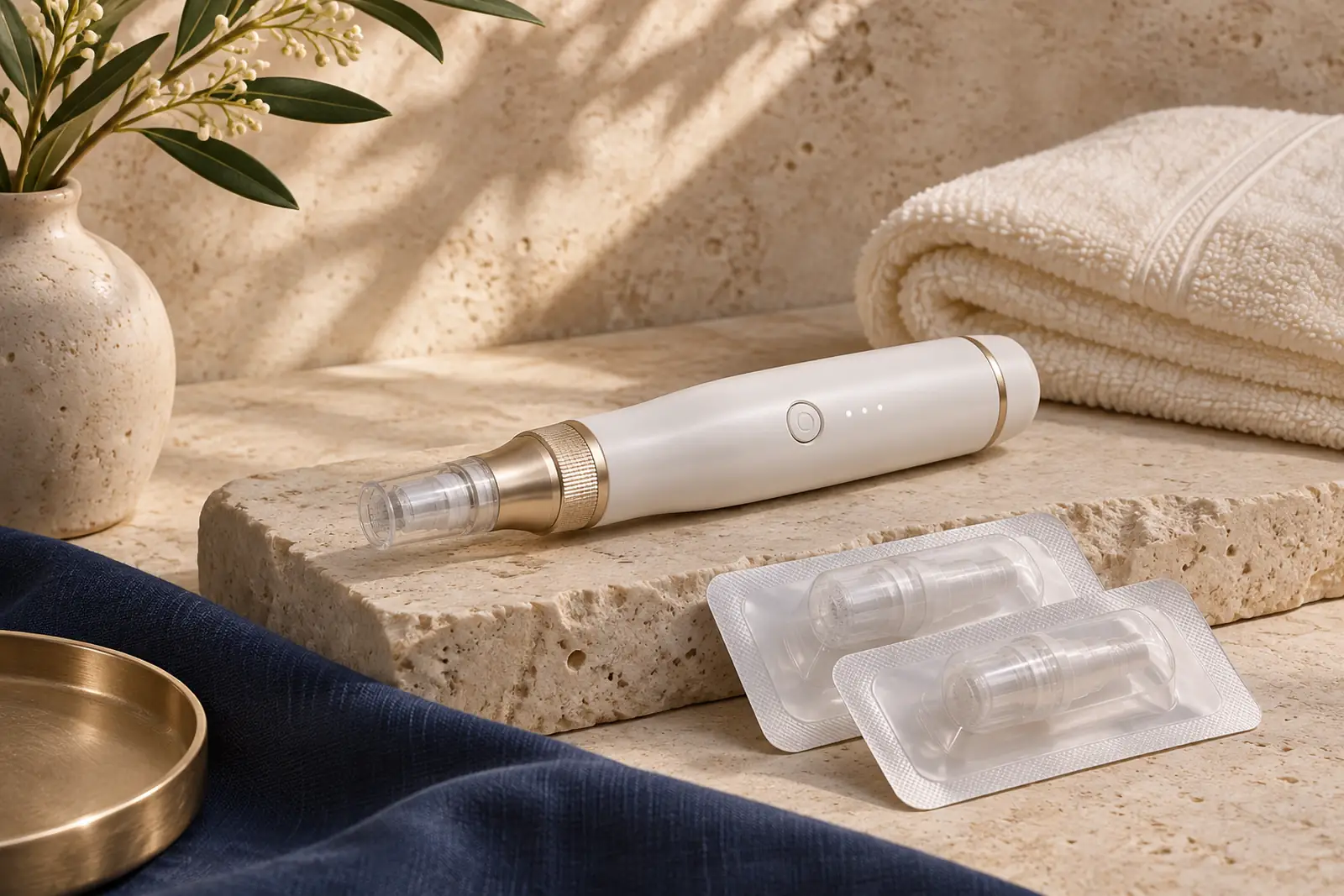
Microneedling uses a device with very fine needles to create controlled micro-channels in the skin, which encourages it to repair and renew.
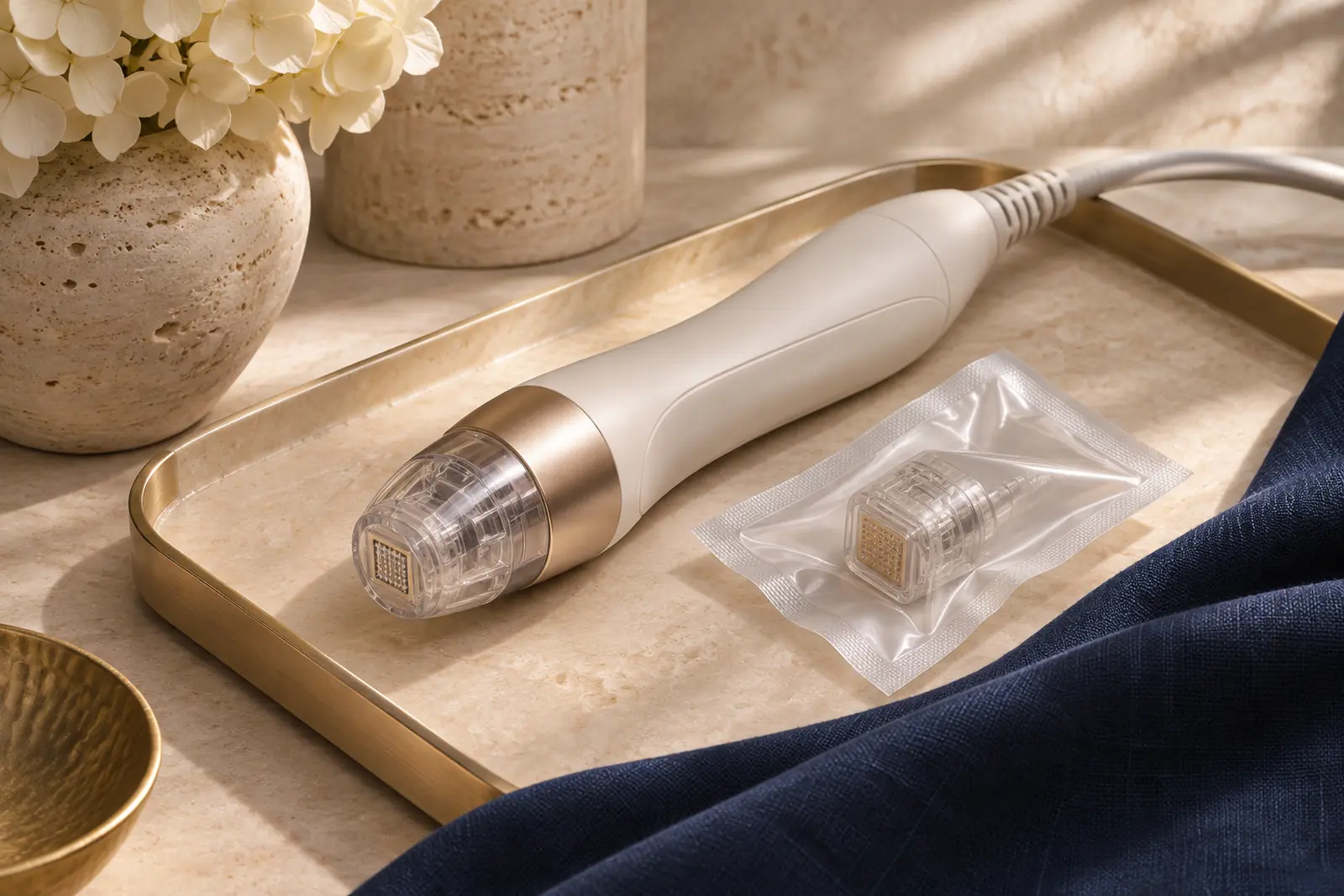
It's carried out after a skin consultation, usually as a course. For deeper texture concerns, RF microneedling adds radiofrequency energy.
Depending on your goals, Rebeca may suggest combining it with RF microneedling or chemical peels as part of a wider plan.

Honest advice, and knowing when to say, “You don't need that.”
Rebeca Lydiatt · RGN, Nurse Prescriber
How it works

Your goals, history and questions first.

Rebeca explains options, cost and timings.

Only what you need, nothing more.

Aftercare to follow and a review if needed.
Is it right for you?
- Not suitable over active acne, infection or cold sores.
- Not suitable if you've recently taken isotretinoin, or tend to form raised scars.
- Not offered during pregnancy.
- Common: redness, swelling, sensitivity and dryness for a few days.
- Less common: changes in skin colour, breakouts or infection.
- Daily SPF is essential while your skin recovers.
Results vary from person to person. Everything is explained before you consent, and you can take time to decide.
Good to know
Is there downtime?
Redness for a day or two is common. You'll be told when you can wear make-up again.
Microneedling or RF microneedling?
RF microneedling adds radiofrequency energy for firmness and deeper texture. Rebeca will recommend which suits your skin.
Does it hurt?
Numbing cream is applied first. Most people feel light prickling.
How many sessions?
Usually a course, agreed with you beforehand.
You might also consider
 Skin
 Consultations
Questions about microneedling?
Leave your details and Rebeca will get back to you, usually the same working day.
“Very refreshing to have expert advice in a clear, non-pushy way.”